Friday, March 20, 2015

Monarch Butterfly


The beautiful monarch butterfly are fascinating creatures. Each year embarking on journeys of migration anywhere from 1,200 to 2,800 miles, they are truly an amazing creation. They travel to the mountainous regions of Mexico from the United States and Canada to avoid the cold weather that comes. When in Mexico the butterflies hibernate and undergo metamorphism, earning the name Danaus plexippus by scientists. But there is more to the process of a monarch butterfly than what meets the eye. In fact, each year there are four generations and four cycles that the butterflies undergo.

The process begins in February and March, where the last generation of butterflies come out of hibernation and find a mate. The couples then fly back north to lay their eggs and reproduce. We will call this the honeymoon phase. 

Next the eggs are laid on to milkweed plants and hatch into baby caterpillars. 
This first generation will eat milkweed until it grows large enough to undergo metamorphosis.  
This process of metamorphosis, called chrysalis
takes 10 days and while it looks like little is occurring, the caterpillar is undergoing amazing transformation. Out comes the beautiful monarch butterfly that now has a short time of 2 to 6 weeks to live and party on flower nectar. They lay eggs for the next generation and go to butterfly heaven. RIP.

The next generation is then born, number 2 in the months May and June. They grow up and party and produce generation 3 in the months of July and August. Finally the last generation is born in September and October, but they are special. 
This fourth generation migrates south to Mexico and do not die as quickly. The magic of Mexico empowers them to live up to 8 months instead of the normal 2 to 6 weeks. They then fly all the way back to the north to restart the process. Amazing. 

Now as as cool as these creatures are they are endangered. The climate change has started to kill the butterflies that get stuck in the cold or the heat causes them to migrate further north where winter is harsher and sooner. These deadly cycle seems to be continuing and their population withers. We as humans can lower our use of fossil fuels and try and help the condition of global warming. Donate to the WWF if you feel moved and check out this awesome website for more information on butterflies. 

Friday, March 13, 2015

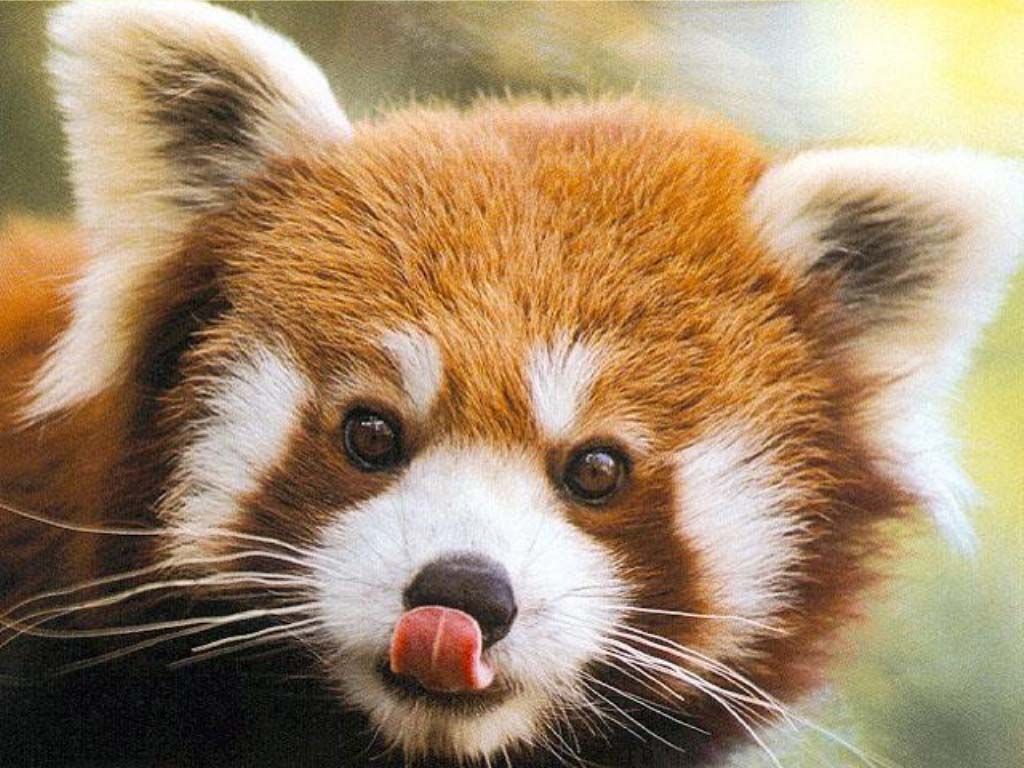
This week we are discussing the adorable creature called the red panda! Now some of you may say "What is a red panda?" While others will exclaim "OH MY GOODNESS RED PANDAS ARE THE BEST!!!!1!!1" Well my friends, I will inform you about the wonders of the red panda as well as the reasons to stop being so uncontrollably excited about them.

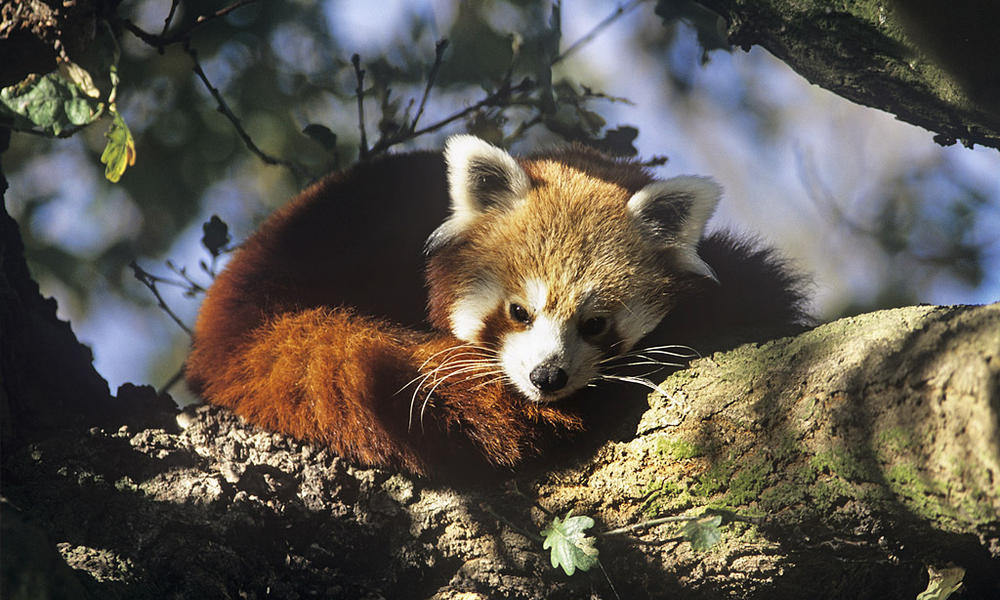
As seen above, the red panda vaguely resembles what most people think of when they hear the word "panda." By vaguely I mean they both have colored fur and ears. The giant panda species, as we all know and love, weighs about 250 lbs. Our lovely counterpart, the red panda, weighs 20 lbs. I'd say they are most definitely related somewhere along the tree of life.  
So now that we know we which panda we are talking about, we can learn some more things about it. According to National Geographic the red panda lives in the same area as the giant panda, but in a wider range. Living in the mountainous regions of Nepal and Burma, these little pandas love to chill in trees. Their diet consists of bamboo, but unlike their stupid giant counterparts, their diet consists of other foods as well. Fruits, acorns, roots, and eggs, red pandas know how to eat. 
As cute as the little creatures may be, they do have some downsides. First, when it comes to mating, they have a pretty bad family environment. Most red pandas are shy except during mating season and live a sad and lonely life of tree sleeping and eating. But once mating season hits love finds its way. Females typically have 1 to 4 offspring which go on to stay in their nest for 90 days. During this time the father panda ignores his mate and children and doesn't pay welfare. What a great guy. After the 90 days the baby pandas get their college degree and go into the world of tree sleeping and eating. The wonderful life. 
Besides the interesting habits of the red panda, they also face endangerment. Caused mainly by deforestation and the spread of agriculture, the red panda faces the same fate as their big twice removed cousins. Organizations such as the World Wildlife Fund  are doing the best they can, but the forest isn't going to grow back from being destroyed. The best advice I can give is to donate and inform, and pray for the little jerks. Because they are too cute to die off. 

Friday, March 6, 2015

Mountain Gorillas

This week we shall learn about the might Mountain Gorilla! 


Perspective 

The gorilla is fierce, powerful, and strong. Living at elevations from 8,000 to 13,000 ft gorillas are intense beasts. Weighing over 400 pounds, gorillas are not to be messed with.
Gorillas also have thick fur allowing them to live through sub-zero temperatures. However, as pesky humans slowly take the mountain gorilla's habitat they are forced father up the mountain, where it is colder and colder. Even the manliest of gorillas can't sustain through the deadly conditions the higher you go.

To give a perspective of the current gorilla population I'll give some comparisons and statistics. Discovered in 1902, gorillas would go on to endure wars, disease, and poaching. In fact it was thought they would surely be extinct by the end of the 20th century. In 1989 the population would grow dangerously low, to 620 gorillas. To compare, here is an image of about 600 people.
This may look like a lot, but realize that average high school in America has 752 students.
Now although the gorilla population was low, it began to rise again and is currently at 786 gorillas today.

To elaborate deeper on why gorillas are threatened and going extinct its because of three main reasons: war, disease, and poaching. In 1990 there was a war in the country of Rwanda, where most gorillas are found. This war sent waves of refugees into the mountainous areas. The refugees would go on to destroy gorilla habitats as well as bring dangerous diseases.These dangerous diseases would go on to kill hundreds of gorillas. Along with the disease and habitat loss, refugees would set up traps for food, but catch gorillas instead. This form of accidental poaching is still just as serious. Through all this the gorillas have dwindled.

Therefore, the next time you are watching Tarzan or see Gorilla Grodd in a Flash comic, think of the actual gorillas in the wild. We need to think about the struggles these animals face as well as aim to help them. World Wildlife Organization is doing its best to help as always, but we should help too. Donate money, spread awareness, and possibly even go over to countries like Rwanda and help with the communities there! Till next time.... beat your chest like a gorilla.


Friday, February 27, 2015

Black Rhinoceros

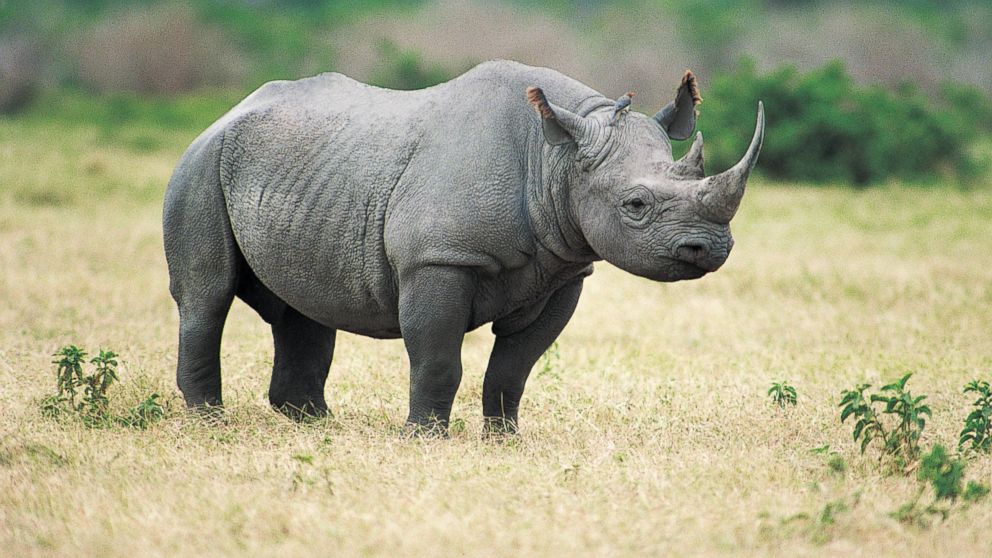
Weighing anywhere from 1,760 to 3080 lbs at 6 ft tall the Black Rhinoceros is not to be dealt with.
As seen here, the black rhino isn't black, but grey. The black rhino is actually classified by the shape of their lip. The black rhino has a pointed upper lip that allows it to pluck leaves and fruit from branches on trees and bushes. Their counterpart, the white rhino, has a squared lip used to graze on grasses.
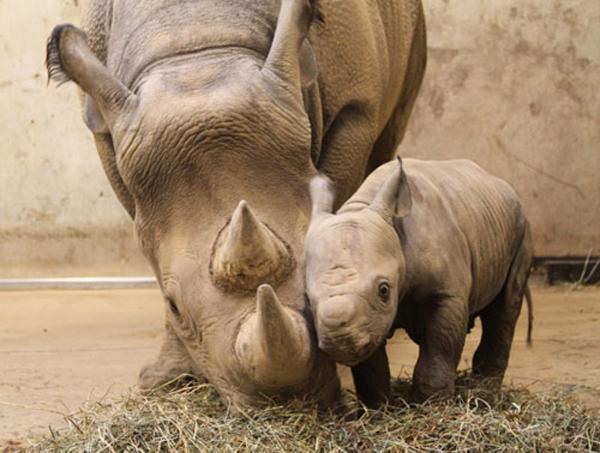
Black Rhinos are found to only mate once every two and half to five years. The rest of the time they are solitary creatures.
However, the baby rhinos will stick with their mother for up to three years, so don't worry.

Black Rhinos take on a nocturnal lifestyle of sorts. Feeding during the dark hours of dawn and dusk and taking cover under trees during the day to survive the blistering African sun. Rhinos live a simple life, grazing the plains following the paths of rhinos before them in search of water holes. A funny habit that rhinos do is to roll in mud to apply a sunscreen of sorts.

But what happens in the face of danger? Well it depends, usually when attacked Rhinos use their trademark horns to fight back. An adult male rhino's horn can grow up to 5 ft! But what about when the Rhino can't fight back? What about in the face of poachers?

Poaching, as stated by Dictionary.com, "is the illegal practice of trespassing on another's property to hunt or steal game without the landowner's permission." Poaching is a serious issue in the Africa region especially for rhinos. Killed primarily for their horns to be used in Asian medicines it is said that 388 rhinos were killed in 2012! (WWF) So the next time you think about rhinos remember why they are in danger!

Check out Nation Geographic to find out more about these awesome creatures!


Thursday, February 19, 2015

Species 2: The Giant Panda

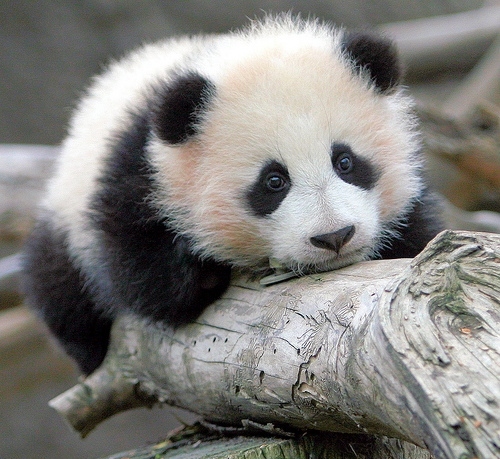
When you think of a Giant Panda, you think of the large black and white bear in Asia eating bamboo. You might even find them adorable. But I have news people, bad news. Now before present this news, let me start off by saying I love animals and think they are beautiful creatures.

However, the news is... that of all the animals that are endangered, pandas are the absolute number one contender for being on the list.
"What? But but... how could you say something so horrible!"
Well, because its true. Before I explain why, lets get a sense of who we are dealing with.
Just look, his eyes use trickery.
Lets examine the panda above. He is quite cute, has loving eyes, and seems to be pretty happy. Let's name this panda Steve. Steve's people can be found in coniferous forests in mountain ranges near Central China. Steve's diet consists of almost entirely bamboo. 

Time out. Let's go deeper into the diet of the Giant Panda. Their diet it their first fault. As elaborated on by the website HowStuffWorks the dietary system of a panda is more fit for digesting meat. In fact, it sucks at digesting bamboo. That's right, pandas literally don't know how to capture prey in the wild so they eat bamboo which they can barely digest. In fact, the pandas must eat 26-28 pounds of bamboo per day to have the energy to live. 

This tastes so bad, but it's all I have. 
Now, I don't want to make the panda's seem like bad creatures, they are pretty cool in the fact they can climb trees extremely well even though they weigh over 330 pounds as an adult. This is comparable to an obese person actually climbing the stairs instead of taking the elevator. 

Besides the issue with the panda's diet, they are basically trying to die. The mating season of a panda lasts about 3 weeks in springtime and only about 2-3 days of this time period does the female panda have the ability to conceive. In fact, most zoos find it difficult to get the pandas to mate at all. 

So we have a creature who has a horrid diet of hard to digest bamboo and mates only 3 weeks a year. They are definitely trying hard to get out of that endangered zone right? But although pandas seem quite out of the loop of their evident extinction, we still love them and care for them. 

One of the largest issues according to the World Wildlife organization is the loss of habitat in the wild. With the pandas eating 26 pounds of bamboo everyday they require lost of forest space. However with industrialization raving at large forest destruction is a major issue. China does have reserves to protect pandas but only about 61% of the panda population is protected. The WWF is aiming to increase policy-level conservation in China. We can help too by raising awareness. 

Just remember, we love pandas, but don't be too sympathetic. Learn from their horrible diet choices and look for something in your life to remove and improve. Check out the Smithsonian National Zoo website for more information. 

Thursday, February 12, 2015

Species 1: Snow Leopards

The snow leopard is a beautiful creature. With bright white fur, piercing yellow eyes, and dark black spots, you cannot deny its beauty. Just look.
Fierce, I know. Now you may be saying, "I don't really know much about snow leopards.... I wish I could learn more." 

WELL DON'T WORRY!
That's why I'm here.


Located in Central Asia, the snow leopard inhabits cold environments. Their thick fur acts as insulation and there wide fur-covered feet make natural snow shoes. Snow leopards are on the top of their food chain acting as deadly predators. Their large powerful legs can jump as far as 50 feet!

Soaring
These powerful predators prey on blue sheep and mountain ibex found in the Himalayas. Although they can kill creatures three times their weight, they are still lazy cats, as a result they also eat smaller game such as hares, birds, and marmots.

However, you may be saying, if we have such a powerful beautiful cat why are they endangered? What is threatening them? Well the cats are a bit stupid. They let the laziness get the best of them and sometimes prey on domestic animals. I mean wouldn't you want to taste one of the fat juicy sheep that seem to walk around in groups for no reason? I know I would.

Well, if you know anything about cause and effect, the snow leopards do not get away with eating free food. They are punished by the herders and farmers who are forced to retaliate to protect their animals.
The enemy

"But Justin, we have to stop the cruel killings of these snow leopards. Why can't the farmers just protect their sheep better with out killing the cats?" 

Well, good question. And in fact the answer is they can! The World Wildlife Fund is working with communities to monitor the leopard activity and help prevent domestic animal attacks. You can help by donating and informing others about the leopards.

If you wish to learn more about snow leopards check out National Geographic's info page. You can also receive a free snow leopard stuffed animal if you give me free lunch for 3 days. (Disclaimer: may or may not be scam) I hope you learned a little bit about snow leopards!